Cureus, 01/07/2026
Introduction
Osteoarthritis (OA) is a multifactorial disease that causes significant functional impairment, with knee osteoarthritis being the most common form. Treatment of knee osteoarthritis includes a range of approaches from conservative management to surgical intervention. Recently, intra-articular PRP injections have been widely used due to their longer-lasting effects, attributed to the presence of multiple growth factors that promote tissue regeneration.
PRP has been evaluated by the National Institute for Health and Care Excellence (NICE) as safe, with a recommendation for further research. Although its efficacy remains debated, numerous randomized controlled trials (RCTs), systematic reviews, and meta-analyses have demonstrated the important role of PRP in the treatment of knee osteoarthritis, while also emphasizing the need for larger-scale studies. This study aims to evaluate the clinical and functional outcomes of intra-articular PRP injections across different stages of knee osteoarthritis and represents the first large multicenter study conducted in an Arab population.
Materials & Methods
Study design and setting
A retrospective pre–post observational study was conducted at the outpatient clinics of rehabilitation and physical medicine at Farwaniya Hospital and Jahra Hospital (Kuwait) from August 2023 to July 2024. Written informed consent was obtained from all patients prior to treatment.
Subjects
Medical records of patients who received PRP injections with a diagnosis of knee osteoarthritis were reviewed. Indications for PRP injection included adults with knee osteoarthritis experiencing chronic persistent pain that did not respond to conventional treatments such as analgesics, joint supplements, hyaluronic acid injections, and physical therapy.
Participants were not restricted by sex or severity of OA; cases of bilateral knee osteoarthritis were also included. Individuals with platelet dysfunction, severe thrombocytopenia, or acute systemic diseases were excluded from PRP injection.
PRP preparation and characteristics
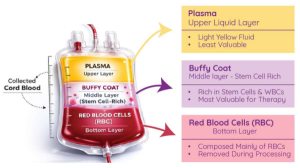
Blood was drawn from each patient using aseptic technique, then centrifuged at 1500 rcf for 5 minutes. After centrifugation, approximately 5–6 mL of PRP was collected from the kit for injection.
Procedure for PRP injection
All patients were instructed to discontinue nonsteroidal anti-inflammatory drugs (NSAIDs) for at least 3 days prior to injection. The intra-articular injection procedure was performed according to standard techniques described in the literature, while strictly adhering to all standard precautions during the procedure.
After injection, patients were given post-procedure care instructions, including avoiding NSAIDs for 2 weeks and performing home exercises such as isometric quadriceps contractions and range-of-motion exercises. All patients were scheduled for regular follow-up visits, and data were thoroughly recorded for each case.
Assessment and outcome measurements
The following information was collected from medical records:
(A) Demographic characteristics and OA status: including age, sex, BMI, duration since OA diagnosis, and severity grading according to the Kellgren–Lawrence (KL) scale.
(B) Outcome measures: recorded before PRP intervention and at follow-up time points of 3 and 6 months, including:
(i) Verbal Numeric Rating Scale (VNRS) for pain [17], in which patients self-rated their pain from 0 to 10 (0: no pain; 10: worst imaginable pain);
(ii) The short-form WOMAC (Western Ontario and McMaster Universities Osteoarthritis Index) [18,19], a self-reported tool consisting of 7 questions assessing function. Each item is scored from 0–4, with a total score ranging from 0–28, where lower scores indicate better function.
(C) Adverse events or side effects during the course of treatment.
Results
A total of 119 knee joints from 91 patients were identified; of these, 114 joints (95.8%) from 86 patients (94.5%) were included in the analysis. Five patients were excluded (2 due to surgery, 3 due to new trauma).
The male/female ratio was 26.74% and 73.26%, respectively. The mean age was 59.97 ± 9.98 years; mean BMI was 33.91 ± 6.06 kg/m²; and the mean symptom duration was 4.39 ± 3.64 years.
Baseline WOMAC and VNRS scores were 18.27 ± 7.83 and 7.22 ± 2.47, respectively; both showed significant improvement at 3 and 6 months (p < 0.001). Effect sizes (Cohen’s d) were large: WOMAC 2.12 (3 months) and 2.07 (6 months); VNRS 1.86 and 1.76. Benefits were observed across all OA stages. WOMAC improvement was greater in advanced stages (KL 3–4), whereas pain reduction (VNRS) was more pronounced in early stages (KL 1–2). Most patients improved at 3 months, and the majority maintained treatment benefits at 6 months.
According to WOMAC, functional outcomes were more stable over time than pain levels, suggesting that functional improvement may be sustained despite fluctuations in pain reduction. Some exceptions reflected inter-patient variability and the need for individualized follow-up. No adverse events or side effects were reported.
Discussion
Efficacy of PRP injection in knee OA
This study provides an overall evaluation of the effectiveness of intra-articular PRP injections in routine clinical practice, demonstrating clinical improvement across all severities of OA and sustained benefits up to 6 months. The findings are consistent with previous studies. Evidence from Mende et al. also supports the efficacy of PRP in reducing pain, improving function, joint stiffness, and quality of life, with effects potentially lasting up to 12 months.
PRP effects in various stages of knee OA
WOMAC and pain scores increased with OA severity, indicating reduced treatment response in advanced stages; the magnitude of improvement was also smaller as the disease progressed. These findings are consistent with Annaniemi et al., who reported that PRP is effective in KL grades 1–3, with the greatest benefit in early stages and diminishing effects as the disease advances.
In stage 4 OA, evidence remains limited and inconsistent; one review suggests that there is insufficient basis for the routine use of PRP. In this study, although improvement was observed at 3–6 months, the magnitude was lower compared to mild-to-moderate OA.
PRP may serve as a “bridge” to delay joint replacement in selected patients. Some studies indicate that PRP can reduce pain and improve function for up to 6 months and may delay total knee arthroplasty (TKA), particularly in patients under 65 years of age; the delay duration can be significant.
The effectiveness of PRP also depends on factors such as age and joint alignment; severe varus deformity reduces treatment response. In this study, the femorotibial axis was not measured, but cases with severe deformity are typically directed toward alternative treatments and were not included in the analysis.
Arab population
The increasing awareness of PRP raises the responsibility to conduct research across diverse populations. Data on racial differences in treatment response remain limited, and PRP studies often lack demographic information.
A study in Saudi Arabia (225 knee joints) showed that PRP improved pain and knee flexion range up to 9 months in stage 2–4 OA. In the present study (114 joints, 98.25% Arab population), VNRS and WOMAC were used and also demonstrated improvement. Patients with high BMI still responded well; 57.01% had BMI >35.
Strength of the study and clinical implications
The main strengths include a large sample size within a native population, implementation at two major hospitals, and standardization of the procedure using a single PRP kit for all patients. The results from an Arab patient cohort across multiple OA stages help support more informed clinical decision-making regarding indications for intra-articular PRP injections.
Limitations
The observational design increases the risk of bias and confounding; however, the relatively large sample size, clear OA classification, and standardized PRP protocol help mitigate this to some extent. The statistical analysis did not fully control for all confounding factors (such as spinal or hip conditions that may affect pain and functional scores). The use of advanced analytical models (e.g., mixed-effects models) in multicenter studies—especially when 35.55% of patients received bilateral knee injections—could improve the reliability of the results.
Conclusion
Intra-articular PRP injections demonstrate positive short-term efficacy across stages of knee osteoarthritis in a selected patient population. Further controlled studies are needed to confirm long-term effectiveness and safety. Studies with larger sample sizes and standardized protocols will strengthen the evidence; additionally, the availability of low-cost, effective treatment options may also influence the design of future research.
References
AlShalahi S S, Baqer A, Singaram J (2026). Effects of Platelet-Rich Plasma Injection in Knee Osteoarthritis Stages 1-4: A Retrospective Cohort Study. Cureus 18(7): e111906.
Source: Cureus