Surgical Neurology International, 26/12/2025
Introduction
Traumatic brain injury (TBI) is a leading cause of death and disability worldwide, with a broad clinical spectrum ranging from mild to severe and a high rate of long-term neurological sequelae. Despite major advances in trauma systems and neurosurgical interventions, mortality in severe TBI remains substantial, and many patients fail to fully recover their pre-injury functional status. Current treatments primarily focus on controlling intracranial pressure and acute complications, but provide limited benefit in preventing secondary injury and promoting neural tissue regeneration, highlighting an urgent need for more effective therapeutic strategies.
Over the past two decades, stem cell therapy has emerged as a promising regenerative approach for TBI. Stem cell–based interventions may support neural repair through multiple mechanisms, including neuroprotection, immunomodulation, and stimulation of endogenous regeneration. The two most extensively studied cell sources are umbilical cord–derived and bone marrow–derived stem cells, both of which have demonstrated the ability to improve neurological function in preclinical models and have shown safety in early-phase clinical trials. However, clinical efficacy remains inconsistent, and significant challenges persist regarding dose optimization, treatment timing, delivery routes, and long-term safety monitoring.
Materials and Methods
Study design
The objective of this scoping review was to evaluate and compare the efficacy of umbilical cord–derived stem cells (UC-SCs) and bone marrow–derived stem cells (BM-SCs) in patients with traumatic brain injury, regardless of whether they belong to the hematopoietic stem cell lineage or mesenchymal stem cells (MSCs).
Inclusion criteria
- Population: Children (0–18 years), adults (18–65 years), and geriatric (> 65 years) patients are diagnosed with TBI, with an age cutoff based on the World Health Organization criteria.
- Intervention: Treatment with UC-SCs (e.g., umbilical cord blood cells, UC-MSCs) or BM-SCs (e.g., BMMNCs, BM-MSCs).
- Comparison: Studies comparing UC-SC and BM-SC therapies, either directly or through parallel arms or cohorts.
- Outcomes:
+ Primary outcomes: Neurological function, cognitive recovery, and functional independence, assessed through validated measures such as the functional independence measure (FIM) and the Karnofsky performance scale.
+ Secondary outcomes: Structural brain recovery (e.g., Magnetic Resonance Imaging volumetrics), inflammatory biomarkers, muscle strength, spasticity (modified Ashworth scale), and adverse events or complications.
+ Study design: Randomized controlled trials (RCTs), cohort studies, and case–control studies conducted in human populations.
Exclusion criteria
- Population: Animal studies, in vitro models, or studies involving conditions unrelated to TBI.
- Intervention: Studies combining stem cell therapy with other nonstem cell treatments where the effects of UCSCs or BM-SCs could not be isolated.
- Study types: Editorials, conference abstracts, reviews, meta-analyses, and expert commentaries.
Results
Characteristics of studies
A total of 552 patients were included across the studies, with ages ranging from 5 to 64 years, including 91 pediatric patients (5–17 years) and 461 adults. The study populations comprised both acute and chronic TBI, with many studies focusing on patients with severe TBI or persistent motor and cognitive sequelae. In acute-stage patients, Glasgow Coma Scale (GCS) scores typically ranged from 3 to 8. Some studies excluded patients with intracranial pressure exceeding 40 mmHg, severe polytrauma, or unstable medical conditions.
Regarding stem cell type, most studies used bone marrow–derived cells, particularly BMMNCs, while a smaller number employed umbilical cord–derived cells such as Wharton’s Jelly UC-MSCs and cord blood cells. Bone marrow cells were typically harvested from the anterior or posterior iliac crest. Dosing strategies varied substantially across studies, including both single-dose and multiple-dose regimens. Cell doses ranged from 1 × 10⁶ to 1.66 × 10⁹ cells per administration, or were weight-adjusted (e.g., 6 × 10⁶ cells/kg). Delivery routes included intravenous infusion, intrathecal injection, intramuscular injection, and in some cases stereotactic implantation directly into brain tissue.
Dose protocols were adapted according to cell source and clinical workflow. For bone marrow–based therapy, autologous intravenous BMMNC infusion was commonly performed within 48 hours after injury at doses of 6 × 10⁶ – 12 × 10⁶ cells/kg. Intrathecal administration via lumbar puncture was also widely used, with doses such as 1 × 10⁶ cells/kg or fixed doses of 8.6 × 10⁷ – 1.28 × 10⁸ cells. One study combined local implantation of autologous MSCs (6.63 × 10⁷ – 1.66 × 10⁹ cells) with a supplementary intravenous infusion 4–12 days later. Another trial used stereotactic implantation of SB623 cells directly into the target brain region at doses of 2.5 – 10 million cells.
In contrast, umbilical cord–based therapies generally applied multi-route delivery strategies. Wharton’s Jelly UC-MSCs were administered intrathecally, intravenously, and intramuscularly at 1 × 10⁶ cells/kg per session, repeated over six cycles spanning 4–6 months. Another study delivered intrathecal UC-MSC injections four times at 5–7 days intervals, each consisting of 1 × 10⁷ cells in 2 mL solution. Allogeneic cord blood cells were used in one study at a dose of 2.5 × 10⁷ cells/kg via intravenous infusion, with follow-up extending to 4 years.
Follow-up duration varied across studies, with most reporting outcomes at 6 months; some extended to 12, 24, or 48 months. Assessments included both clinical outcomes (motor and cognitive function) and imaging findings. Despite heterogeneity in methodology, cell type, dose, and delivery route, the studies collectively provide a comprehensive overview of current clinical practice and the therapeutic potential of stem cell therapy in TBI.
Comparative overview of bone marrow and umbilical cord stem cell trials in TBI
Stem cell therapy for traumatic brain injury has advanced substantially, with the two most studied sources being bone marrow–derived stem cells (BM-MSCs, BMMNCs) and umbilical cord–derived stem cells (WJ-MSCs, UCBCs). Clinical trials show that bone marrow cells have been widely applied in both pediatric and adult populations, particularly during the acute phase. Autologous BMMNC infusion within 48 hours after injury significantly improves Glasgow Outcome Score, neuropsychological measures such as memory, IQ, and motor speed, and supports overall functional recovery. Imaging analyses demonstrate reduced white matter volume loss, preservation of the corpus callosum, and improved diffusion indices on DTI. Early treatment is also associated with fewer ventilator days, shorter intensive care stays, and better intracranial pressure control. In the subacute and chronic phases, intrathecal bone marrow cell administration has shown the ability to restore consciousness in patients with prolonged vegetative states, improve motor and cognitive function, and increase cerebral metabolism on PET. Bone marrow–based interventions generally exhibit a favorable safety profile, with mostly mild and transient adverse effects such as headache or brief seizures in patients with a prior history of epilepsy.
In contrast, umbilical cord–derived stem cells have emerged as an important alternative, particularly in chronic TBI or when autologous cell harvesting is not feasible. Studies using WJ-MSCs with multi-route delivery protocols report marked improvements in spasticity, muscle strength, functional independence, and cognitive performance, along with enhanced quality of life during long-term follow-up of up to 48 months. One randomized trial found that patients treated with UC-MSCs achieved significantly greater improvements in motor function, balance, and sensation after 6 months compared with controls. Case reports using allogeneic UCBCs also describe gains in cognition and emotional regulation, accompanied by improved imaging parameters. Overall comparisons suggest that bone marrow cells hold an advantage in autologous applicability and in the breadth of clinical evidence across TBI severity levels, while also demonstrating dose-dependent immunomodulatory effects. Umbilical cord cells, meanwhile, offer benefits in availability, noninvasive procurement, and potential for long-term neurorestorative support, although large randomized trials remain limited. Both therapies show high tolerability, with no treatment-related mortality reported and only mild, transient adverse events observed.
Discussion
Traumatic brain injury (TBI) remains a leading cause of long-term disability, while truly neuroregenerative treatment options are still very limited. Stem cell therapy has emerged as a promising approach because it targets multiple pathological mechanisms, including immunomodulation, neuroprotection, stimulation of neurogenesis, and structural tissue repair. Among available cell sources, bone marrow–derived mesenchymal stem cells (BM-MSCs) and umbilical cord–derived mesenchymal stem cells (UC-MSCs) are the two most extensively studied and exhibit therapeutically complementary properties.
BM-MSCs are typically autologous and have a well-established safety profile. Their effects are closely linked to structural neuroprotection: secretion of neurotrophic and angiogenic factors, stabilization of the blood–brain barrier, reduction of neuroinflammation, and promotion of axonal remodeling and endogenous repair mechanisms. Imaging data from clinical trials demonstrate preservation of white matter and reduced brain volume loss, reinforcing the role of BM-MSCs in tissue protection and long-term structural recovery.
UC-MSCs, particularly cells derived from Wharton’s Jelly, tend to exhibit stronger immunomodulatory and metabolic effects. They regulate inflammatory pathways, support mitochondrial function, and enhance neuroplasticity through paracrine signaling and exosome-mediated mechanisms. Clinically, UC-MSC therapy is associated with earlier improvements in motor and cognitive function, especially in chronic TBI patients, while offering practical advantages in cell availability and minimally invasive procurement.
Overall, BM-MSCs may provide more stable structural neuroprotection, whereas UC-MSCs tend to promote faster functional recovery. Rather than representing competing strategies, these differences reflect biologically complementary strengths. Both therapies demonstrate high safety and meaningful clinical potential. However, heterogeneity in dosing, delivery routes, and outcome measures limits direct comparison and prevents robust meta-analysis. Standardized future trials are necessary to define optimal protocols and accelerate clinical translation.
Table 1. Comparison of BM‑SC and UC‑SC therapies in traumatic brain injury
| Đặc điểm | BM-SCs/BMMNCs (tủy xương) | UC-MSCs/UCBCs (dây rốn) | ||
| Ethical concern | No | No | ||
| Tissue harvesting |
|
Noninvasive (from postdelivery tissue) | ||
| Culture process | Easy | Easy | ||
| Impact of donor age on cells | Quantity and quality decline with age | Unaffected | ||
| Cells proliferation | Lower | Higher | ||
| Expression of embryonic markers | Lower | Higher | ||
| Anti‑inflammatory property | Good (dose‑dependent reduction of IL‑1β, TNF‑α, IFN‑γ) | Good (modulate immunity, secrete neurotrophic factors) | ||
| Allogeneic cell rejection | No (typically autologous) | No (allogeneic use tolerated) | ||
| Chance of tumor growth | Very low | Very low | ||
| Stem cell types used | BMSCs, BMMNCs | WJ-MSCs, UCBCs | ||
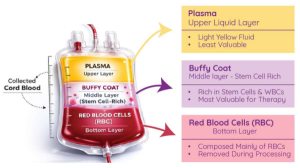
| Source of collection | Anterior/posterior iliac crest | Wharton’s Jelly, umbilical cord blood | ||
| Common dosage range | 6×10⁶ –12×106 cells/kg (IV); up to 1.66×10⁹ (local) | 1×10⁶ cells/kg/session; 2.5×10⁷ cells/kg (IV); 1×10⁷ cells (IT) | ||
| Delivery routes | IV, intrathecal, stereotactic brain implantation | IV, intrathecal, intramuscular (multimodal) | ||
| Typical TBI stage treated | Acute and Subacute | Chronic | ||
| Safety profile | Safe; minor events (mild headache, transient fever) | Safe; minor effects (fever, injection site pain) | ||
| Reported clinical benefits | Improved GOS, cognition, motor recovery, and white matter preservation | Improved cognition, motor strength, spasticity, and quality of life | ||
| BM‑SC: Bone marrow‑derived stem cells, BMMNC: Bone marrow mononuclear cell, GOS: Glasgow Outcome Scale, IFN‑γ: Interferon‑gamma, IL: Interleukin, TNF‑α: Tumor necrosis factor‑alpha, UC‑SC: Umbilical cord‑derived stem cells, WJ‑MSC: Wharton’s jelly mesenchymal stem cell | ||||
Conclusion
Stem cell therapy represents a promising approach in the treatment of traumatic brain injury (TBI), offering neuroregenerative and neuroprotective benefits beyond standard therapies. This review indicates that both bone marrow–derived stem cells (BM-SCs) and umbilical cord–derived stem cells (UC-SCs) demonstrate safety, feasibility, and preliminary efficacy in improving neurological outcomes across different stages of TBI. BM-SCs, particularly autologous BMMNCs, are the most extensively studied and show the ability to reduce inflammation, preserve white matter, and enhance functional recovery, with notable effects in acute and subacute TBI. In contrast, UC-SCs — including Wharton’s Jelly UC-MSCs and cord blood cells — offer advantages in availability, noninvasive procurement, and sustained functional improvement, especially in chronic TBI. However, direct comparison remains limited due to differences in cell sources, dosing, delivery routes, and outcome measures. No head-to-head randomized trials currently establish the superiority of one therapy over the other. Future research should focus on protocol standardization, large multicenter trials, and long-term follow-up to optimize stem cell–based treatment strategies for TBI.
References
Nazwar TA, Amar N, Ismail MA, Maruapey NMZS, Bal’afif F, Wardhana DW, Bal’afif F (2025). Current evidence on umbilical cord and bone marrow stem cell therapy in TBI: A scoping review for future clinical practice. Surg Neurol Int. Dec 26; 16:547.
Nguồn: Surg Neurol Int
Link: https://surgicalneurologyint.com/wp-content/uploads/2025/12/14196/SNI-16-547.pdf