
Parent’s Guide to Cord Blood, July 2026
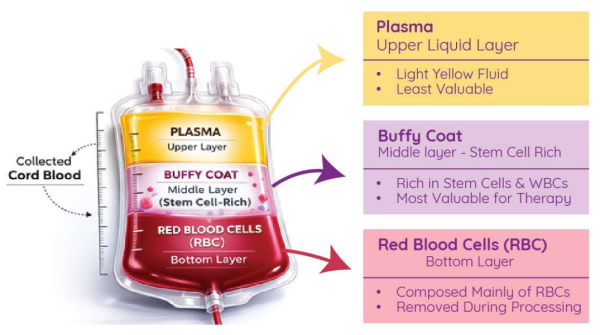
This is a story about turning trash into treasure. Traditionally, cord blood banks separate cord blood into three components: plasma, buffy coat, and red blood cells (RBCs). The buffy coat—which contains white blood cells and is rich in stem cells—is the only portion that cord blood banks preserve by cryopreservation. Most cord blood banks (both public and family banks) discard both the plasma and the red blood cells.
Now, researchers have discovered that red blood cells from cord blood can play a critical role in supporting premature infants. The clinical demand for cord blood red blood cells opens up a new product market for cord blood banks. This raises logistical questions: How can bank operations be adapted to produce red blood cell products that meet patient needs, and how can this be done efficiently and cost-effectively?
Medical Need for Cord Blood Red Blood Cells in Premature Infants
Extremely low gestational age newborns (ELGANs—infants born before 28 weeks of gestation) frequently suffer from anemia of prematurity and often require multiple small-volume red blood cell transfusions. Traditionally, these transfusions have relied on adult donor blood collected by blood banks.
However, neonatal red blood cells are not identical to adult red blood cells. In the womb, the fetus produces fetal hemoglobin (HbF), which has a higher oxygen affinity than adult hemoglobin (HbA). Fetal hemoglobin allows the fetus to absorb oxygen from maternal blood across the placental interface. After birth, the infant’s metabolism gradually stops producing HbF and shifts completely to HbA production by several months of age.
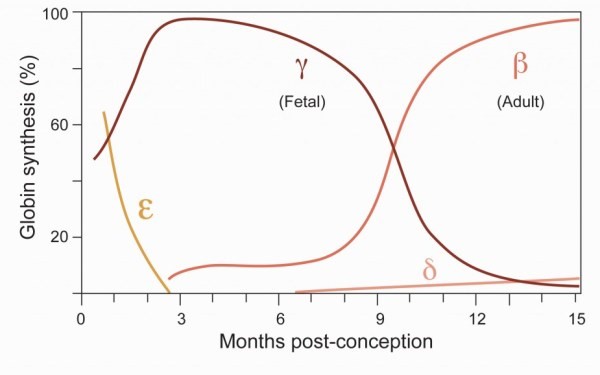
For extremely premature infants (ELGANs), because they are born so early, they still depend entirely on fetal hemoglobin. When they receive repeated transfusions of adult red blood cells, their blood composition shifts from HbF to HbA. For many years, medical researchers have worried that replacing neonatal blood with adult blood causes tissue hypoxia in their organs, potentially contributing to severe complications of prematurity, such as:
- Retinopathy of prematurity (ROP)
- Bronchopulmonary dysplasia (BPD)
- Necrotizing enterocolitis (NEC)
Between 2000 and 2010, several researchers proposed storing autologous cord blood (the baby’s own cord blood) for perinatal transfusion, and a few trial studies took place in Germany and the Netherlands. The results were disappointing because the most premature infants yielded the smallest volumes of cord blood while having the highest transfusion requirements. Clearly, ELGAN infants cannot supply enough cord blood for their own transfusion needs.
Consequently, cord blood transfusions for extremely premature babies must rely on allogeneic (donor) cord blood. Beginning in 2012, a research team in Italy initiated prospective clinical trials on this approach.
Clinical Evidence Supporting Cord Blood Red Blood Cells
In a proof-of-concept clinical trial involving 25 premature infants published in 2020, the Italian team demonstrated that transfusing cord blood red blood cells helps maintain fetal hemoglobin levels in the infants’ blood. Each transfusion of adult red blood cells increased the risk of HbF dropping to the lowest quartile by approximately 10-fold.
A phase 2 clinical trial comparing cord blood red blood cell transfusions to adult red blood cell transfusions in ELGAN infants was conducted over three years (2022–2024), named BORN (Cord Blood to Improve Premature Newborn Outcomes). The trial brought together 9 public cord blood banks and 10 neonatal intensive care units (NICUs) across Italy. The primary endpoint was severe retinopathy of prematurity—one of the leading causes of childhood blindness.
The BORN trial faced several logistical challenges but was ultimately successful. The study enrolled 142 ELGAN infants; cord blood banks processed 451 cord blood units for red blood cell transfusion (matched based on ABO and Rh blood types).
- Intervention Group (58 infants): Received 107 cord blood RBC transfusions and 111 adult RBC transfusions.
- Control Group (60 infants): Received 240 adult RBC transfusions.
Not all infants in the intervention group received cord blood every time a transfusion was needed due to logistical hurdles. However, the subgroup of infants who received exclusively cord blood red blood cells showed a significant reduction in the incidence of severe retinopathy of prematurity (ROP).
Feasibility of Producing Cord Blood Red Blood Cells
The main logistical hurdle is that red blood cells have a limited shelf life. While cord blood stem cells are frozen at – 96oC and can be stored indefinitely, standard red blood cells are typically stored a t4oC for only a few weeks. This requires cord blood banks to continuously produce new units to replace expiring inventory. When an infant needs an urgent transfusion, a fresh unit with the matching blood type may not always be available.
Two research groups (in Italy and Spain) conducted feasibility studies on laboratory protocols for producing cord blood red blood cells with the following key steps:
- Unit Selection: Using public bank donor units that are too small in volume to qualify for stem cell transplantation.
- Sterility Testing: Bacterial and fungal cultures initiated immediately upon sampling.
- Leukoreduction: Applying a customized protocol to remove white blood cells.
- Storage: Separating red blood cells and storing them near 4oC
- Irradiation: Gamma irradiation prior to transfusion or before day 14 to ensure safety.
- Transfusion: Administered to the patient within 24 hours post-irradiation.
The usability window is squeezed at both ends: constrained on one side by sterility testing (taking 5–7 days) and on the other by irradiation (performed by day 14). As a result, only about one week remains in practice during which the red blood cell unit can be transfused.
Potential Improvements in Production
- Extending Storage Duration
The most critical improvement would be extending shelf life. Adult red blood cells can be stored for 42 days (or 28 days if irradiated). The Spanish research group noted that cord blood red blood cells are more sensitive to radiation (showing significant hemolysis and elevated potassium levels within 24 hours of irradiation), but these units could still be safely stored for 21 days prior to irradiation while maintaining quality standards.
- Integration into Standard Processing
Rather than dedicating specific cord blood units exclusively to red blood cell production, banks could harvest red blood cells during standard cord blood processing. A feasibility study conducted in June 2026 at the PBKM FamiCord laboratory (Warsaw, Poland) showed a 98% red blood cell recovery rate during Hespan processing. However, residual white blood cell levels remained too high. Integrating an additional leukoreduction step post-processing would successfully yield a clinically suitable product.
Market Demand and Outlook
Extremely low gestational age newborns (ELGANs) represent about 0.7% of total live births in the United States (over 25,000 infants per year). Each infant requires an average of 3 to 8 small-volume transfusions. If cord blood red blood cell transfusions become standard care in the U.S., demand would reach over 100,000 small-volume units per year—far exceeding the current collection capacity of public cord blood banks.
The BORN trial researchers advocate expanding this model through partnerships between cord blood banks and neonatologists. This sustainable treatment method could be rapidly deployed in any blood bank, including those in low-income countries.
Currently, many cord blood banks (both public and family) continue to discard red blood cells during processing. With proper maternal consent and appropriate technical adjustments, these red blood cells can be preserved to treat premature babies—officially turning medical “waste” into an invaluable treasure.
References
Source: Parent’s Guide to Cord Blood
Link: https://parentsguidecordblood.org/en/news/red-blood-cells-premature-babies-product-cord-blood-banks