Orthopedic Reviews, 12/03/2026
Introduction
Osteoarthritis (OA) is a chronic degenerative disease and a leading cause of joint pain and functional impairment, particularly in individuals over 45 years of age. Among its forms, knee osteoarthritis (KOA) is the most common, characterized by cartilage loss and damage to joint structures. Biologically, OA is associated with increased pro-inflammatory cytokines and activation of matrix metalloproteinases (MMPs), leading to extracellular matrix (ECM) degradation and dysregulation of proteins such as cartilage oligomeric matrix protein (COMP).
Current treatment approaches mainly focus on pain relief and functional improvement, including nonsteroidal anti-inflammatory drugs (NSAIDs), physical therapy, intra-articular injections, and surgery. However, their long-term efficacy remains limited. Arthroscopy may provide benefits in early-stage disease by removing inflammatory factors and damaged cartilage debris.
Recently, mesenchymal stem cells (MSCs) and their secretome have emerged as promising approaches in regenerative medicine due to their anti-inflammatory, immunomodulatory, and cartilage-regenerative effects. This study aims to evaluate the efficacy of UC-MSCs and their secretome in patients with and without arthroscopy, as well as to investigate their impact on mesenchymal stem cell–related biomarkers in osteoarthritic synovial fluid (synovial fluid mesenchymal stem cells – SFMSCs). We hypothesize that combining arthroscopy with MSCs or secretome may improve clinical outcomes and promote cartilage regeneration in KOA.
Materials and Methods
The study was designed as a randomized, open-label clinical trial that met the predefined inclusion criteria.
Study Participants/Patient Selection
All participants provided written informed consent, and the study was approved by the institutional ethics committee.
Inclusion criteria included: age between 55 and 70 years; diagnosis of knee osteoarthritis (KOA) grade 2–3 according to the Kellgren–Lawrence scale, confirmed by two independent evaluators; absence of systemic or local infection; and biochemical and hematological parameters within acceptable limits.
Exclusion criteria included: infection or seropositivity for HIV, hepatitis, or syphilis; history of malignancy; genetic disorders affecting morphology or transplantation outcomes; intra-articular injection within the past 3 months; participation in another clinical trial within the past 30 days; or other comorbidities affecting overall health status.
Outcome measures included:
- Subjective assessments: WOMAC and VAS scores
- Objective assessments: levels of COMP, MMP-13, and IL-6 in synovial fluid, and cartilage evaluation using MRI T2 mapping
A total of 7 patients (6 females; mean age 56 years) with KOA were enrolled in the study.
Sample Collection and Preparation
Donors were selected based on the following criteria: age between 20 and 25 years; no history of malignancy; and negative screening results for HIV, hepatitis B/C, CMV, syphilis, toxoplasma, rubella, and herpes. All donors provided informed consent prior to sample collection.
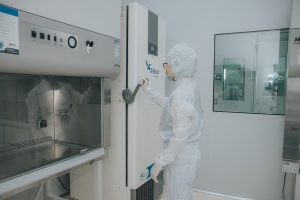
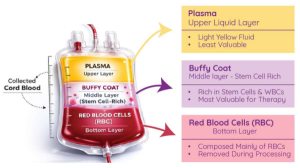
Umbilical cords (approximately 5–10 cm in length) were collected during delivery and rinsed with 0.9% NaCl solution to remove residual blood. The samples were then transported to the laboratory for processing and the production of UC-MSCs and their secretome.
Randomisation and Intervention
Patients were allocated into two groups: with arthroscopy and without arthroscopy. Both groups received intra-articular injections following a standardized regimen consisting of an initial 2 mL dose of secretome, followed by 10 million UC-MSCs, and subsequent booster injections of 2 mL secretome every two weeks. Patients were monitored and re-evaluated at 6 months and 12 months after stem cell administration.
Biochemical Assay
Synovial fluid samples were collected from each patient at baseline and at 12 weeks post-intervention, with an approximate volume of 5 mL per collection. Samples were centrifuged to obtain the supernatant, which was then analyzed using a pooled sample strategy to evaluate inflammatory and extracellular matrix degradation biomarkers.
Arthroscopic Procedure
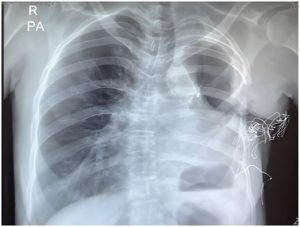
Prior to arthroscopy, each patient underwent necessary preoperative evaluations, including complete blood tests; assessment of cardiac, hepatic, and coagulation function; chest X-ray to evaluate pulmonary status; and surgical fitness evaluation by specialists in internal medicine, pulmonology, cardiology, and anesthesiology.
Once deemed eligible, patients proceeded to arthroscopic surgery. Spinal anesthesia was administered, followed by the creation of two small incisions (~1 cm) below the patella at the anterolateral and anteromedial portals. An arthroscopic camera and surgical instruments were introduced through these portals to visualize and operate within the joint.
A sterile solution was infused into the knee joint, allowing assessment of synovitis, cartilage damage, and the presence of osteophytes. Pathological components were managed through debridement, including removal of debris and damaged tissue. The joint was then irrigated with a sterile solution supplemented with antibiotics (gentamicin 80 mg) and drained. Finally, the incisions were closed using simple sutures.
Results
This study evaluated the therapeutic efficacy of UC-MSCs and UC-MSC-derived secretome in patients with osteoarthritis using clinical outcome measures and synovial fluid (SF) analysis.
Clinical Outcomes
The therapeutic efficacy of UC-MSCs and UC-MSC-derived secretome was assessed using both subjective and objective measures. Among the participants, 2 patients underwent arthroscopy, while 5 did not. Treatment was administered in three escalating doses, with evaluations conducted at baseline, 1 month, 6 months, and 12 months. Clinical outcomes were measured using the WOMAC and VAS scores.
Both groups demonstrated a reduction in WOMAC scores, indicating improvement in joint function. Due to incomplete and inconsistent VAS data, WOMAC was used as the primary outcome measure.
In the arthroscopy group, WOMAC scores decreased from 40–48 at baseline to 9–32 at 1 month, further improving to 2–24 at 6 months, but showed a slight increase at 12 months (10–35).
In the non-arthroscopy group, baseline WOMAC scores ranged from 15–32, with marked improvement at 1 month (0–12) and 6 months (0–18). At 12 months, 4 out of 5 patients maintained or showed further improvement, with WOMAC scores ranging from 0–53.
Biochemical Results
To further elucidate the underlying mechanisms, synovial fluid (SF) from osteoarthritis patients was analyzed after co-culture with UC-MSCs and their secretome.
Co-culture with UC-MSCs resulted in increased levels of IL-6 and IL-12p70, along with decreased IFN-γ and COMP compared to SF alone. Other cytokines and matrix-degrading enzymes (including IL-1β, MCP-1, IL-8, IL-17A, IL-18, IL-23, and MMP-1, -3, -7, -13) showed no significant changes, suggesting that UC-MSCs selectively modulate specific inflammatory and cartilage-degrading factors.
In contrast, UC-MSC-derived secretome demonstrated a broader immunomodulatory effect, with significant reductions in IL-1β, IFN-γ, IL-6, IL-12p70, IL-17A, IL-18, MMP-1, MMP-7, MMP-13, and COMP, while MCP-1, IL-8, IL-23, and MMP-3 remained unchanged.
These in vitro findings are consistent with the observed clinical improvements, indicating that the secretome exerts stronger anti-inflammatory and anti-degenerative effects, while also contributing to the protection of cartilage structure.
Discussion
Treatment with UC-MSCs in patients with osteoarthritis demonstrated significant improvements in function and quality of life, as reflected by reduced WOMAC scores. However, a slight increase in WOMAC at 12 months was observed in some cases, consistent with previous studies, suggesting that the therapeutic effect may not be fully sustained over time.
Patients who underwent arthroscopy prior to treatment tended to show better outcomes, possibly due to the removal of debris and inflammatory factors within the joint, thereby optimizing the microenvironment and enhancing the efficacy of stem cell therapy.
Mechanistically, UC-MSCs exhibited selective modulation of inflammatory and cartilage-degrading factors. The inflammatory microenvironment may “activate” MSCs, promoting cytokine secretion and recruitment of endogenous cells, thereby supporting tissue regeneration and restoration of homeostasis. The reduction in COMP, alongside MMP activity, aligns with the known role of these enzymes in cartilage degradation.
In contrast, UC-MSC-derived secretome demonstrated broader and more potent anti-inflammatory effects, with significant reductions in multiple cytokines and MMPs. This may be attributed to its rich composition of growth factors, anti-inflammatory cytokines, and chemokines, enabling more effective regulation of inflammation compared to cells alone.
Overall, the therapeutic benefit likely arises from a multi-phase synergistic mechanism: arthroscopy improves the joint microenvironment, the secretome provides early anti-inflammatory effects, and UC-MSCs promote long-term regeneration and immunomodulation.
Limitations of the study include the small sample size, short follow-up duration, lack of comprehensive imaging evaluation and VAS data, as well as heterogeneity in disease severity and arthroscopic intervention. Future studies should involve larger, controlled trials with patient stratification and deeper mechanistic analyses to better identify responders to therapy.
Conclusion
The combined use of UC-MSC-derived secretome and UC-MSCs, following arthroscopic joint debridement, provides complementary therapeutic benefits in knee osteoarthritis. The secretome enables rapid inflammation reduction by suppressing pro-inflammatory cytokines and matrix-degrading enzymes, while UC-MSCs subsequently promote cartilage regeneration through enhanced cell proliferation and differentiation.
Clinical improvements observed up to 6 months, together with in vitro findings, suggest that this two-stage strategy represents a promising approach for both inflammatory control and joint regeneration in patients with osteoarthritis.
References
Yanuarso, Devi DK, Lestari K, et al. Influence of Synovial Fluid Biochemical Markers on Clinical Outcomes Following Arthroscopic and Non-Arthroscopic Patients with Knee Osteoarthritis. Orthopedic Reviews, 18.
Source: Orthopedic Reviews