Wiley Online Library, 08 July 2026
A case report published in Case Reports in Hematology (2026) described the successful use of haploidentical hematopoietic stem cell transplantation (haplo-HSCT) to treat chemotherapy-induced severe aplastic anemia (SAA) in a breast cancer survivor. This represents one of the first reported cases demonstrating that haploidentical HSCT may serve as an effective therapeutic option for patients who lack a fully HLA-matched donor.
Case Presentation
- Patient History and Pre-transplant Evaluation
- Patient: A 46-year-old woman diagnosed with stage IIA invasive breast cancer (Luminal B, HER2-positive). She underwent breast-conserving surgery followed by six cycles of TCbHP chemotherapy and seven cycles of HER2-targeted therapy.
- Development of SAA: The patient subsequently developed severe aplastic anemia, characterized by persistent pancytopenia lasting more than three months. Bone marrow biopsy demonstrated marked hypocellularity, with a cellularity of approximately 20%. She failed to respond to conventional therapies, including hematopoietic growth factors and immunosuppressive agents such as corticosteroids, cyclosporine, and tacrolimus.
- Transplant eligibility: Prior to transplantation, the breast cancer remained in remission, with normal CA125 and CA15-3 levels and no evidence of bone marrow metastasis. Major organ functions were preserved. Because no fully HLA-matched donor was available, the patient underwent haploidentical HSCT using stem cells donated by her biological sister (6/12 HLA match).
- Haploidentical Allogeneic Hematopoietic Stem Cell Transplantation
Conditioning regimen
The patient received the following conditioning regimen before transplantation:
- Busulfan (BU): 3.2 mg/kg/day for 1 day (Day –4).
- Fludarabine (Flu): 25 mg/m²/day for 5 consecutive days.
- Cyclophosphamide (CY): 50 mg/kg/day for 2 consecutive days.
- Anti-thymocyte globulin (ATG): 2.5 mg/kg/day for 4 consecutive days.
Supportive care and prevention of transplant-related complications
Comprehensive supportive therapy was administered throughout transplantation, including:
- Phenytoin for Busulfan-induced seizure prophylaxis.
- Mesna to prevent Cyclophosphamide-induced hemorrhagic cystitis.
- Mycophenolate mofetil (MMF) and Cyclosporine A for graft-versus-host disease (GVHD) prophylaxis.
- PEG-G-CSF and thrombopoietin (TPO) to promote hematopoietic recovery.
- Letermovir for cytomegalovirus (CMV) prophylaxis and Cotrimoxazole for prevention of Pneumocystis jirovecii pneumonia.
Engraftment and hematologic recovery
- Day +7: The patient developed fever, cough, diarrhea, and oral mucositis. Empirical antimicrobial therapy was intensified with Biapenem, Acyclovir, and Posaconazole.
- Day +10 (31 July 2023): Successful neutrophil engraftment was achieved.
- Day +15 (5 August 2023): Platelet engraftment was successfully established.
- Day +30 (20 August 2023): Bone marrow examination demonstrated active hematopoiesis, while short tandem repeat (STR) analysis confirmed 99.30% donor chimerism.
Clinical Outcomes
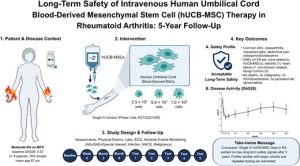
The transplantation was successful, with neutrophil engraftment occurring on day +10 and platelet recovery on day +15 after transplantation. During the early post-transplant period, the patient developed fever, oral mucositis, diarrhea, and Human herpesvirus 6B (HHV-6B) infection, followed by acute cutaneous GVHD on day +20. These complications were successfully managed with methylprednisolone, umbilical cord blood-derived mesenchymal stem cell (UC-MSC) infusion, antiviral therapy, and adjustment of immunosuppressive medications.
By day +30, laboratory findings demonstrated substantial hematopoietic recovery, including a white blood cell count of 3.58 × 10⁹/L, a hemoglobin level of 89 g/L, and a platelet count of 68 × 10⁹/L. Bone marrow function had returned to normal, and STR analysis showed 99.3% donor-derived hematopoiesis. At 120 days post-transplantation, donor chimerism remained stable at 97.81%, indicating sustained graft function, and the patient continued to recover under outpatient follow-up.
Scientific Significance
Chemotherapy-induced severe aplastic anemia is an extremely rare but life-threatening complication, particularly in patients treated for breast cancer. This case represents one of the first reports demonstrating that haploidentical HSCT can completely restore hematopoiesis in patients who fail conventional medical therapy and lack a fully HLA-matched donor.
The successful outcome expands the therapeutic potential of haploidentical transplantation for secondary bone marrow failure following chemotherapy. It also highlights that, when combined with an appropriate conditioning regimen, effective GVHD prophylaxis, and comprehensive post-transplant supportive care, haploidentical HSCT can achieve favorable outcomes even in high-risk patients.
Source: Wiley Online Library
Link: https://onlinelibrary.wiley.com/doi/10.1155/crh/1212359