
Therapeutic advances in ophthalmology, 18/08/2026
Introduction
Keratoconus is the most common corneal ectatic disorder, characterized by progressive corneal thinning and protrusion, causing irregular astigmatism and usually developing during adolescence.
Current treatment modalities include optical correction, corneal cross-linking (CXL), intrastromal corneal ring segments (ICRS), and corneal transplantation. CXL is the standard method for preventing disease progression but does not restore the structure of the corneal stroma, while ICRS has inconsistent long-term efficacy and corneal transplantation is limited by the availability of donor tissue and the risk of complications.
The pathogenesis involves not only mechanical weakening but also stromal collagen dysregulation, increased MMP activity, and oxidative stress, making it difficult for current treatments to fully restore corneal biology.
Wharton’s jelly–derived mesenchymal stem cells (WJ-MSCs) are receiving attention in regenerative medicine due to their immunomodulatory, paracrine, and highly proliferative properties, as well as their low immunogenicity. The secretome, particularly exosomes and extracellular vesicles, is also being investigated as cell-free therapies. Initial evidence suggests that WJ-MSCs may support corneal regeneration through the secretion of biological factors, modulation of inflammation–immunity, and cell replacement. However, their mechanisms of action, safety, standardization, and potential clinical applications still need to be clarified.
Method
A search of PubMed/MEDLINE, Embase, Web of Science, and ClinicalTrials.gov was conducted from 01/2000–07/2026 using keywords related to WJ-MSCs, EVs, secretome, keratoconus, corneal ectasia, corneal regeneration, CXL, and bioprinting. Preclinical, clinical, GMP, potency assessment, and drug/cell delivery platform studies were selected; two independent authors performed screening and data extraction.
Due to differences among studies, the results were qualitatively synthesized, focusing on mechanisms of action, clinical translation potential, and comparisons with CXL, ICRS, and corneal transplantation.
Wharton’s jelly–derived MSCs: Key properties
WJ-MSCs are multipotent stromal cells isolated from Wharton’s jelly of the umbilical cord, which are readily obtainable and capable of ex vivo expansion.
- Cellular characteristics: Express CD105, CD73, and CD90; do not express CD34, CD45, or HLA-DR. Have higher levels of Oct-4, Sox-2, and Nanog than adult MSCs, which are associated with high proliferative and clonogenic potential.
- Differentiation capacity: Maintain multilineage differentiation capacity and can differentiate in vitro into corneal epithelial-like cells expressing CK3 and CK12.
- Immunomodulation: Low immunogenicity, lack MHC-II and co-stimulatory molecules; secrete TGF-β, IL-10, PGE2, and IDO, helping suppress immune responses.
- Paracrine activity: The secretome contains growth factors, cytokines, and EVs, contributing to inflammation control, limiting fibrosis, and promoting tissue repair.
- Compared with bone marrow- and adipose-derived MSCs, WJ-MSCs have stronger proliferative and immunomodulatory capacities, supporting their potential application in corneal regeneration.
Corneal ectasia and rationale for stem cell therapy
Keratoconus is characterized by stromal thinning, corneal protrusion, and progressive biomechanical instability, associated with ECM dysregulation, inflammation, oxidative stress, and cellular dysfunction.
- ECM dysregulation: Loss of collagen organization, altered MMP/TIMP balance, reduced collagen cross-link density, and abnormal fiber orientation increase matrix degradation and corneal weakening.
- Epithelial alterations: Changes in epithelial thickness and epithelial–stromal interactions may contribute to disease progression.
- Oxidative stress and inflammation: Increased ROS, impaired antioxidant systems, keratocyte apoptosis, and dysregulation of genes/ECM promote stromal weakening.
Current approaches such as CXL, ICRS, and corneal transplantation primarily stabilize the structure or improve vision but do not fully restore stromal biology and cellular function.
Therefore, MSCs are being investigated for their ability to modulate inflammation/fibrosis, secrete trophic factors, regulate the ECM, promote stromal remodeling, and support epithelial healing. The secretome contains factors such as TGF-β, PDGF, VEGF, and bFGF that support tissue repair and regeneration. Overall, MSCs have the potential to simultaneously target ECM dysregulation, inflammation, and oxidative stress, contributing to the restoration of corneal homeostasis and function.
Evidence from preclinical and clinical studies
Growing preclinical and early clinical evidence indicates that WJ-MSCs have therapeutic potential for corneal disorders, with implications for corneal ectasia. Current evidence includes in vitro differentiation studies, animal models of corneal injury/ectasia-like alterations, early clinical data on MSCs in ocular surface disorders, as well as cell delivery strategies and cell-free derived products.
Animal models and wound repair
In preclinical studies, WJ-MSCs have demonstrated regenerative potential, primarily through paracrine signaling mechanisms, including the secretion of bioactive factors capable of modulating inflammation and tissue repair processes. Overall, MSC-based therapies have shown a favorable safety profile in experimental and early translational studies, with no consistent evidence of significant immunogenicity or tumorigenicity reported.
Ectasia-relevant findings
Preclinical studies in corneal models relevant to corneal ectasia suggest that WJ-MSCs may contribute to stromal reinforcement and restoration of corneal structure through keratocyte-like differentiation and graft integration into the tissue, without clear evidence of immune graft rejection. Approaches combining WJ-MSCs with CXL suggest the potential for synergistic benefits: CXL provides mechanical stabilization, while WJ-MSCs promote cellular and molecular regeneration, thereby potentially improving tissue strength and functional outcomes.
Early human studies with MSCs in corneal disease
Early clinical studies using bone marrow- and adipose-derived MSCs in ocular surface disorders have reported improvements in epithelial healing, corneal clarity, and visual acuity, with an acceptable short-term safety profile, thereby supporting the clinical translation potential of approaches using WJ-MSCs. These findings in patients with persistent epithelial defects, neurotrophic keratopathy, and stromal scarring provide a translational basis for the application of WJ-MSCs in corneal ectatic disorders.
Safety-focused early trials
Early clinical studies evaluating the safety of allogeneic MSC use in ocular surface disorders have not reported serious ocular or systemic adverse events, thereby demonstrating the feasibility of future trials focused on corneal ectatic disorders.
Delivery strategies and biomaterials
WJ-MSC delivery routes, including topical, intrastromal, and subconjunctival administration, are being optimized to balance cell retention, survival, and safety. Hydrogels and decellularized matrices may enhance cell retention, paracrine effects, and reduce mechanical stress, while also being combined with CXL or intrastromal devices. In vitro studies also indicate that modulation of developmental signaling pathways can direct WJ-MSCs toward differentiation into a corneal epithelial-like phenotype, supporting ocular surface regeneration.
Cell-free approaches
Secretome and extracellular vesicles (EVs) derived from WJ-MSCs recapitulate many of the regenerative and immunomodulatory effects of intact cell therapy in corneal injury models, including promoting epithelial healing and reducing inflammation. These products may simplify manufacturing processes, reduce regulatory barriers, and mitigate concerns regarding prolonged cell persistence or ectopic effects of living cells, while also allowing repeated dosing.
Outstanding questions and trial design considerations
Key issues that remain to be clarified include the optimal dose, route of cell delivery, timing of intervention, long-term safety, and durability of therapeutic effects. Standardization of cell manufacturing processes and potency assays is necessary to ensure reproducibility across centers.
Synthesis
Preclinical evidence supports the biological rationale and safety of WJ-MSCs in corneal repair, particularly through ECM reorganization and improvement of biomechanical properties. Early human studies and safety trials of allogeneic MSCs provide a basis for clinical translation. Combining WJ-MSCs with CXL and using cell-derived products are potential approaches to enhance efficacy and scalability in the treatment of keratoconus.
Mechanisms of action
WJ-MSCs exert therapeutic effects through multiple complementary mechanisms, including paracrine signaling, immunomodulation, antifibrotic effects, ECM remodeling, and limited lineage-specific differentiation. Current evidence suggests that most of these effects are primarily mediated by secreted factors and extracellular vesicles.
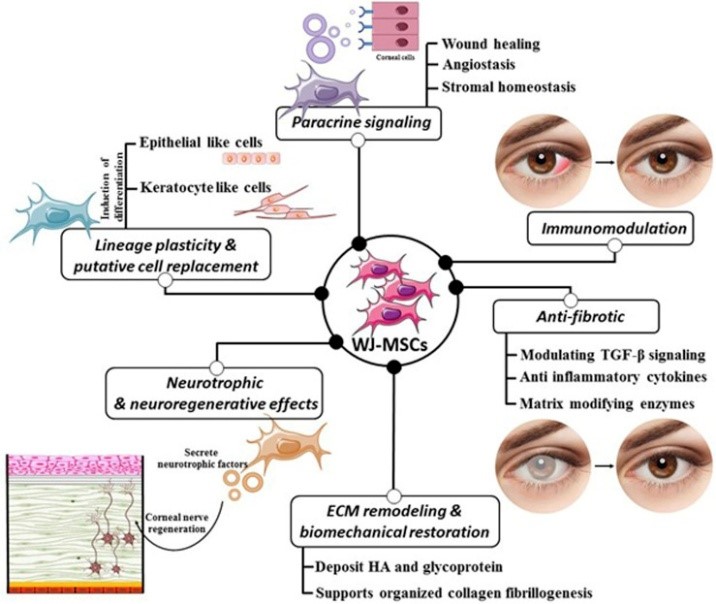
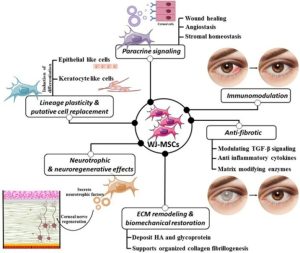
Figure 1. Mechanisms of action of Wharton’s jelly–derived mesenchymal stem cells in the cornea.
Paracrine signaling and EV-mediated crosstalk
WJ-MSCs secrete a secretome comprising growth factors, cytokines, chemokines, ECM proteins, and EVs, which help regulate wound healing, inflammation, and stromal homeostasis. EVs contain miRNA, mRNA, proteins, and lipids, and have the capacity to reprogram recipient cells, thereby reducing inflammation and fibrosis and promoting epithelial recovery and stromal remodeling. FBLN5 promotes tissue repair through integrin–RAC1–ERK signaling, increasing cell migration and proliferation. These signals also help regulate proteases, reduce oxidative stress, and support collagen organization, contributing to the maintenance of corneal clarity and biomechanical properties.
Immunomodulation
The immune privilege of the cornea, combined with the low immunogenicity of WJ-MSCs, helps reduce allogeneic immune responses. WJ-MSCs secrete TGF-β, IL-10, PGE2, and IDO and express HLA-G, thereby inhibiting T cells and dendritic cells, modulating Th1/Th17 responses, and increasing regulatory T cells. As a result, WJ-MSCs may reduce chronic inflammation, oxidative stress, and ECM degradation associated with keratoconus.
Anti-fibrotic actions
WJ-MSCs may exert antifibrotic effects through modulation of TGF-β signaling, reduction of myofibroblast activation, and simultaneous limitation of stromal scarring and excessive corneal opacity formation. miRNAs in EVs further inhibit profibrotic gene networks in stromal cells, helping maintain corneal clarity and reduce corneal opacity after injury or surgery. By restoring a pro-resolving inflammatory environment, WJ-MSCs may improve optical quality beyond that achieved by biomechanical interventions alone.
ECM remodeling and biomechanical restoration
WJ-MSCs produce an HA- and glycoprotein-rich matrix, providing a temporary scaffold for repopulation by host cells and supporting the formation of organized collagen fibers, thereby contributing to improved stromal lamellar architecture and mechanical strength. In corneal ectatic disorders, this remodeling process may limit disorganized collagen orientation and reduced cross-link density, which are fundamental factors underlying the deterioration of biomechanical properties.
Lineage plasticity and putative cell replacement
Under defined induction conditions, WJ-MSCs have been shown to have the capacity to differentiate toward corneal epithelial-like and keratocyte phenotypes, expressing markers such as CK3/CK12, keratocan, and lumican. However, their engraftment and long-term functional maintenance in vivo remain incompletely understood.
Neurotrophic and neuroregenerative effects
WJ-MSCs also secrete neurotrophic factors that may support corneal nerve regeneration and epithelial healing in experimental models. Overall, WJ-MSCs may modulate the corneal microenvironment through a combination of regenerative, anti-inflammatory, and immunomodulatory mechanisms. The relative contribution of each mechanism may vary depending on the stage of disease, cell delivery method, and adjunctive therapies.
Safety, limitations, and comparative perspective
Safety profile
Early preclinical and clinical studies indicate that WJ-MSCs have a favorable short-term safety profile, with no reported tumorigenicity, ectopic tissue formation, or serious immune complications in ophthalmic applications. Adverse events associated with MSC therapy are generally mild and transient when the cells are manufactured and used according to appropriate standards.
Immunological considerations
The low-immunogenic phenotype and active immunosuppressive capacity of WJ-MSCs (TGF-β, IL-10, IDO, HLA-G) help reduce the risk of allogeneic immune responses in corneal applications.
Comparative advantages over other MSC sources
Compared with bone marrow- and adipose-derived MSCs, WJ-MSCs offer the advantages of non-invasive procurement, high proliferative capacity, delayed senescence, and strong immunomodulatory effects, while also being amenable to storage and scalable manufacturing, making them suitable for the development of standardized, ready-to-use products.
However, limitations remain regarding post-transplantation cell survival, manufacturing standardization, and the optimal dose, timing, and route of cell delivery. Clinical data are still limited due to small sample sizes and short follow-up periods, necessitating larger controlled trials.
Regulatory landscape
The approval of MSC-based therapies requires standardization of manufacturing processes, quality control, and rigorous clinical evaluation. Differences in regulatory requirements across regions and challenges in translating research into clinical applications remain important barriers to the implementation of MSC-based therapies in clinical practice.
Comparison with conventional therapies
CXL, ICRS, and corneal transplantation primarily improve optical and biomechanical properties without restoring cellular and molecular functions. WJ-MSCs aim to modulate disease pathogenesis, reduce inflammation, regulate the ECM, and promote regeneration, with the potential for less invasive, repeatable administration and combination with CXL to both stabilize the structure and promote biological repair.
However, the long-term efficacy and cost-effectiveness of WJ-MSCs compared with existing approaches remain undetermined.
Synthesis and outlook
WJ-MSCs have a promising safety profile and biological characteristics, along with practical advantages in manufacturing. Addressing challenges related to cell survival, standardization, regulatory compliance, and the quality of evidence will determine the transition of WJ-MSCs from a promising experimental therapy into an accepted intervention incorporated into treatment guidelines for corneal ectatic disorders.
Challenges and future directions
Although early preclinical and clinical results are highly encouraging, several important scientific, manufacturing, and regulatory challenges remain to be addressed before WJ-MSC-based therapies can be integrated into routine clinical practice for corneal ectatic disorders.
Evidence gaps and clinical trial priorities
Human data remain limited due to small sample sizes and heterogeneity in indications, assessment criteria, and follow-up duration. Future research should prioritize randomized controlled, multicenter trials with standardized endpoints for structure, biomechanics, visual acuity, and patient-reported outcomes. Stratification by disease stage, progression rate, corneal thickness, and stromal scarring may help identify suitable patient populations and optimize treatment timing.
Manufacturing and standardization
Standardization of donor selection, cell expansion, manufacturing, and potency assessment is needed to ensure the reproducibility and clinical translatability of WJ-MSCs. Potency assays should reflect mechanisms of action, including immunomodulation, antifibrotic effects, EV characteristics, and ECM regulation, while also correlating with clinical outcomes. Cryopreservation, thawing, and cell administration procedures need to ensure the maintenance of cell viability and secretory function.
Regulatory alignment and ethical deployment
Wharton’s jelly-derived products need to be rigorously developed and evaluated, with GMP manufacturing, CMC documentation, characterization criteria, potency assays, umbilical cord sourcing, and donor consent standardized. Clinical trials should proceed in phases: Phase I to assess safety and dose; Phase II to evaluate dose and preliminary efficacy; and Phase III to confirm safety, efficacy, and durability. At the same time, international regulatory harmonization is needed, along with prevention of unproven “stem cell” services to protect patients.
Optimizing delivery and persistence
Enhancing the retention and activity of WJ-MSCs in the cornea is an important challenge for maintaining therapeutic efficacy. Biomaterial-based cell delivery systems such as hydrogels and decellularized matrices may improve cell survival, integration, and localization of paracrine effects. Preconditioning strategies such as hypoxic culture or cytokine exposure may also enhance immunomodulatory activity and resistance to oxidative stress. Combining WJ-MSCs with CXL may simultaneously provide structural reinforcement and regeneration, but the optimal sequence and timing remain to be determined.
Cell-Free therapeutics
Approaches using secretome and extracellular vesicles (EVs) derived from WJ-MSCs are receiving increasing attention because they may retain regenerative effects while simplifying manufacturing and reducing concerns associated with live cell therapy.
Convergence with advanced bioengineering
Advances in tissue engineering open new avenues for more predictable and sustainable corneal restoration. 3D bioprinting and biofabrication enable the development of biomimetic corneal structures incorporating WJ-MSCs, with the potential to regenerate stromal architecture and support future regenerative approaches for progressive corneal ectasia that is unresponsive to CXL.
Personalized and data-driven medicine
Interindividual differences in disease pathogenesis and treatment response may require more personalized WJ-MSC approaches. Molecular, imaging, and biomechanical biomarkers may support optimization of patient selection, treatment timing, and response assessment. Machine learning and multimodal data integration may also improve prediction of disease progression and treatment outcomes, while optimizing cell dose and delivery methods. The establishment of standardized cell banks and perinatal donor registries may enhance the consistency and scalability of allogeneic WJ-MSC products.
Health-system integration and access
The cost and scalability of WJ-MSCs, EVs, and standalone or CXL-combination approaches need to be evaluated in comparison with CXL, ICRS, and corneal transplantation to support the development of reimbursement mechanisms. At the same time, real-world databases on safety, efficacy, and patient-reported outcomes will complement clinical trials and support post-marketing safety monitoring.
Forward look
The feasibility of stem cell therapy for corneal repair in other indications, such as cultured autologous limbal epithelial cells (CALEC), provides a conceptual and regulatory precedent for cell therapy in ophthalmology, although the cell source and indication differ from those of WJ-MSCs in corneal ectasia. With rigorous clinical research, harmonized manufacturing, and appropriate regulatory oversight, WJ-MSCs, either as living cells or cell-free products, may progress from an experimental therapy to a disease-modifying, adjunctive treatment, or in some cases, reduce the need for corneal transplantation.
Overall, the progress of WJ-MSC therapy for corneal ectasia depends on clinical evidence, standardization of manufacturing and cell delivery, and rigorous regulatory evaluation. Addressing these challenges is essential for successful translation into clinical practice.
Conclusion
WJ-MSCs have scalable manufacturing potential, low immunogenicity, and paracrine activity, targeting core abnormalities in keratoconus, including ECM dysregulation, impaired biomechanics, and keratocyte dysfunction. Preclinical evidence suggests the potential to accelerate epithelial healing, reduce corneal opacity, and remodel the stroma, while early clinical studies with MSCs from other tissue sources provide indirect evidence of the feasibility and short-term safety of ocular MSC use. The main benefits are associated with immunomodulation, antifibrotic effects, and EV-mediated reprogramming.
Key gaps remain regarding dose, cell delivery route, GMP manufacturing, and potency assays linked to mechanisms of action. Multicenter randomized trials with standardized biomechanical endpoints and patient-reported outcomes are needed. Clinical translation requires a clear regulatory strategy, GMP-compliant manufacturing, CMC control, product characterization, potency assessment, ethically sourced raw materials, preclinical toxicology, and Phase I–III clinical evaluation. If adequately validated, WJ-MSCs, particularly cell-free products, may complement CXL and, in some cases, reduce the need for corneal transplantation.
References
Khorrami-Nejad, M., Jumah, R. Q., Aghamollaei, H., Narooie-Noori, F., Hashemian, H., & Jadidi, K. (2026). Wharton’s jelly-derived mesenchymal stem cells in keratoconus. Therapeutic advances in ophthalmology, 18, 25158414261475131.
Source: Therapeutic advances in ophthalmology
Link: https://pmc.ncbi.nlm.nih.gov/articles/PMC13487106/